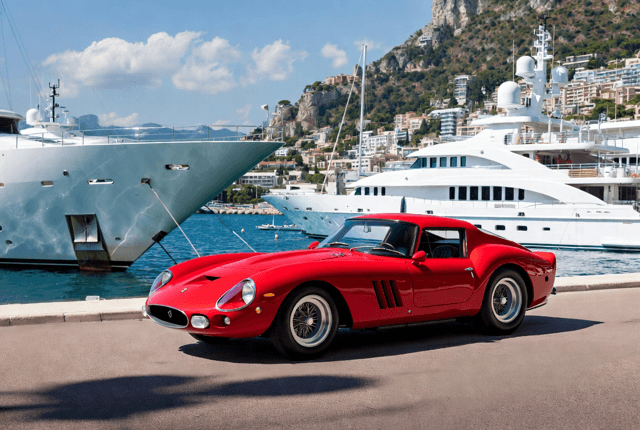
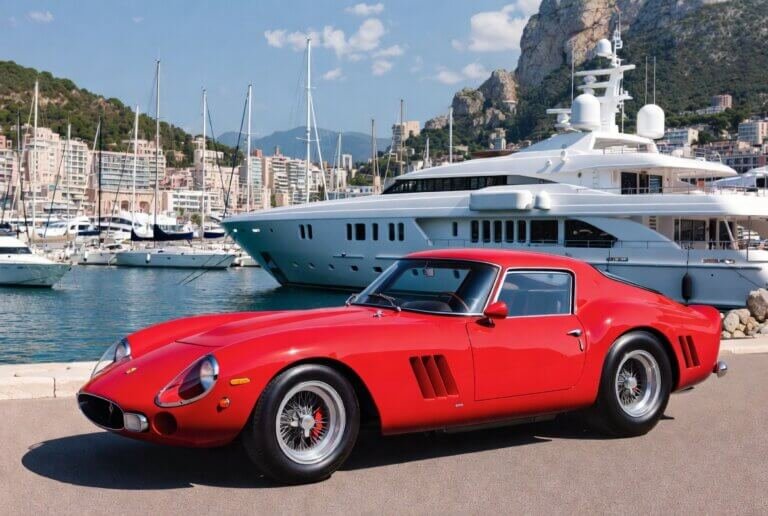
Ferrari 250 GTO 1962 Series I
FOR SALE
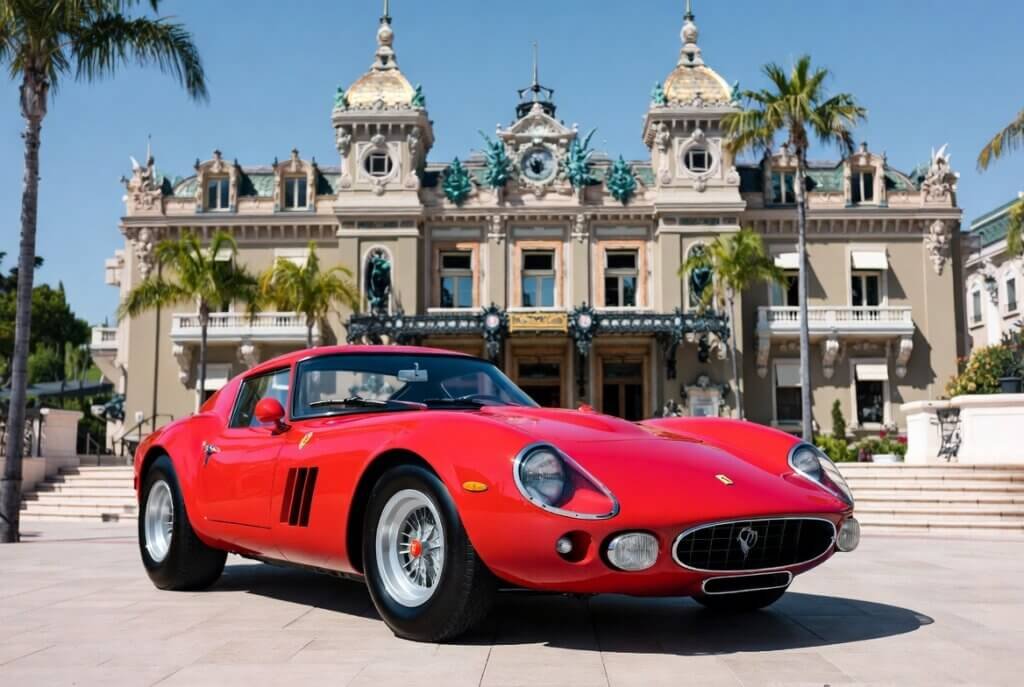
The 1962 Ferrari 250 GTO is one of the most iconic and desirable cars ever built. Only 36 examples were made between 1962 and 1964, created specifically to dominate the FIA World Manufacturers Championship in the GT class.
Under the hood sits a 3.0-litre Colombo V12 (Tipo 168/62 Comp) breathing through six Weber carburetors. It delivers around 300 horsepower at 7,500 rpm and 294 Nm of torque at 5,500 rpm. Power goes to the rear wheels through a 5-speed manual gearbox with Porsche-style synchromesh.
The chassis uses a strong tubular steel frame with a 2,400 mm wheelbase, while the body is hand-formed from lightweight aluminum by Scaglietti. At the time, its combination of power, low weight, and sharp handling made it faster than rivals like the Jaguar E-Type on the track.
Key Details Ferrari 250 GTO 1962 Series I
- Engine: 2,953 cc V12
- Power: ~300 PS (296 bhp)
- Suspension: Independent front wishbones, live rear axle with radius arms
- Brakes: Four-wheel discs
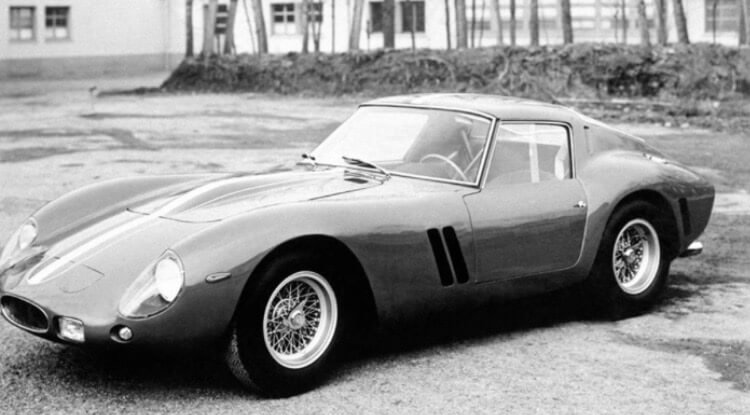
- Special touches: Vents on the front fenders and a small riveted rear spoiler — signature features of the earliest cars.
Designed with input from Giotto Bizzarrini and refined by Sergio Scaglietti, the 250 GTO has a long, aggressive nose and beautifully balanced proportions. Drivers and engineers nicknamed the prototype “Il Mostro” (The Monster) because of its raw character.
In competition, it was devastatingly effective. After a prototype debut at Monza in 1961, the 250 GTO went on to win the International Championship for GT Manufacturers in 1962, 1963, and 1964.
Today it remains one of the most valuable and sought-after cars in the world — a pure racing machine that also happens to be stunningly beautiful!
We discreetly source and place vehicles of this calibre for private clients.
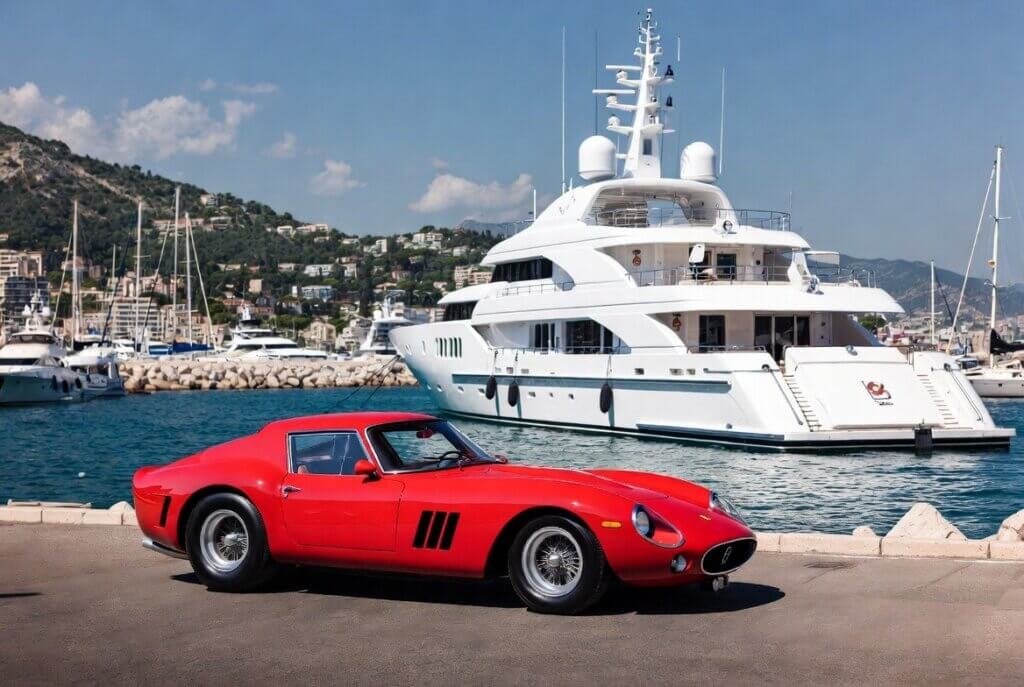
Visual & Bodywork Difference between Series I & II
The biggest visual distinction between the early and later 250 GTOs comes down to the bodywork. Ferrari gradually evolved the design, moving it closer in character to the mid-engined 250 LM.
Key differences include:
- The Nose Series I cars have the classic look with three distinctive D-shaped cooling vents sitting above the main grille. Series II models deleted these vents entirely for a cleaner, smoother, and flatter front end.
- Roof and Rear Window Series I models use a long, elegant fastback roofline that flows into a large wrap-around rear window. In contrast, Series II cars have a shorter roof that drops off sharply behind the seats, paired with a more vertical, recessed rear window — creating a notchback-style appearance.
- Overall Stance Series II bodies sit noticeably lower and wider than the original 1962 design, giving them a more planted and aggressive presence.
Production of the Ferrari 250 GTO
Ferrari only ever built 36 examples of the 250 GTO. Here’s how they break down:
- 33 cars were originally constructed as Series I (between 1962 and 1963).
- 3 cars were built from the factory as Series II in 1964.
- Additionally, 4 Series I cars were later sent back to the factory and rebodied in the Series II style. The chassis numbers are: 3413, 4091, 4399, and 4675.
Technical Tweaks
While the core 3.0-litre V12 engine remained fundamentally the same, Ferrari made several small but meaningful improvements on the Series II cars. These included revisions to the gearbox, suspension setup, and chassis reinforcement to help the car stay competitive against emerging threats like the Shelby Cobra.
Investment Perspective: 1962 Ferrari 250 GTO Series I
Why This Model Matters
The 1962 Ferrari 250 GTO stands in a league of its own as one of the strongest long-term investments in the collector car world — often described as the ultimate blue-chip automotive asset.
Performance Track Record
When new, a 250 GTO cost around $18,000. Today, well-documented examples typically trade in the $40–70 million range, depending on history, originality, and condition.
- Recent public sales include $51.7 million (2023, a 1962 330 LM/250 GTO at RM Sotheby’s) and $48.4 million (2018).
- A 1963 example sold privately for $70 million in 2018 — still the highest price ever paid for a Ferrari.
- Even in early 2026, a white right-hand-drive 1962 example fetched $38.5 million at Mecum Kissimmee, viewed by many as a relative “bargain” in this segment.
Over decades, top examples have delivered annualized returns that comfortably beat stocks, real estate, and gold for patient holders. One well-known case: a car bought in 1977 for the equivalent of ~$336,000 today would now be worth tens of millions.
Why it Holds Value so Well
- Extreme Scarcity — Only 36 were built (plus a handful of related 330 GTO variants).
- Racing Pedigree — Dominant in the early 1960s GT championships.
- Timeless Design — Widely regarded as one of the most beautiful cars ever made.
- Cultural Icon Status — Strong demand from ultra-high-net-worth collectors who see it as both a trophy and a store of value.
- Resilience — Unlike many classics, values hold even with real-world mileage and gentle use. The car rewards being driven rather than punishing it.
Hagerty and other valuation tools currently place average good-condition 1962 examples around $50+ million.
Risks and Practical Considerations
- Entry Barrier — This is not an investment for most people. Liquidity exists only at the very top tier of buyers.
- High Ownership Costs — Insurance can run tens of thousands per year, plus specialized storage, maintenance, and potential restoration expenses.
- Volatility & Illiquidity — While long-term performance is outstanding, short-term prices can fluctuate. Sales can take time and usually happen through private deals or major auctions.
- Authenticity & Provenance — Value depends heavily on matching numbers, documented history, and originality. Any red flags can significantly impact price.
Bottom Line
For someone with the means, a 1962/1963 Ferrari 250 GTO is closer to buying a masterpiece painting or prime real estate than a typical classic car. It has proven remarkably recession-resistant and continues to appreciate over the very long term.
It offers tremendous emotional satisfaction alongside strong wealth preservation potential — but only if you plan to hold it for many years and truly enjoy the car. It is not a quick-flip opportunity.