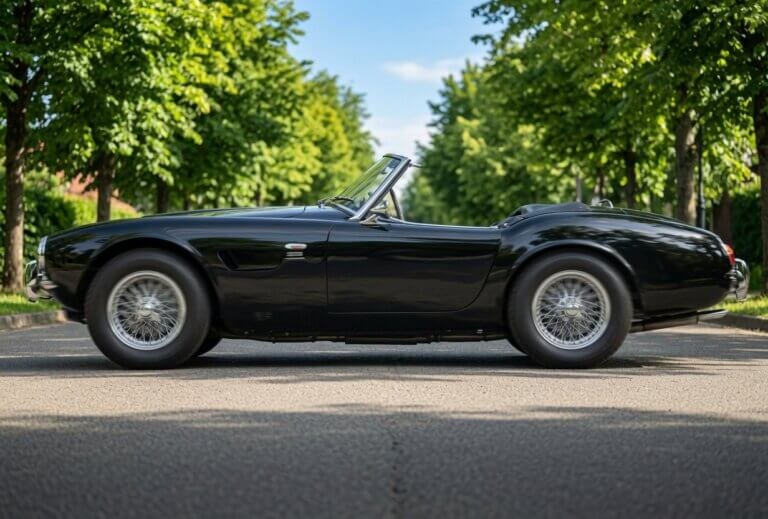
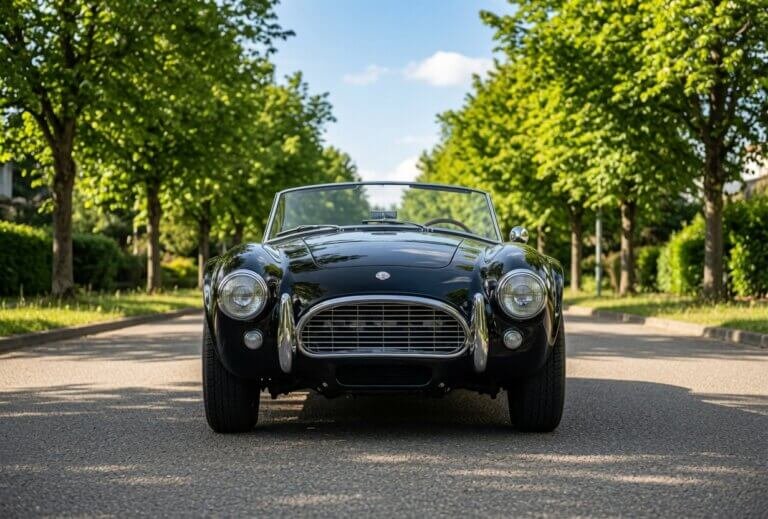
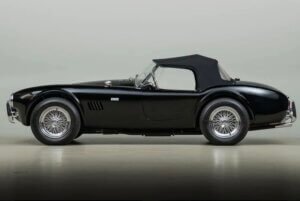
AC Shelby Cobra 1962
FOR SALE
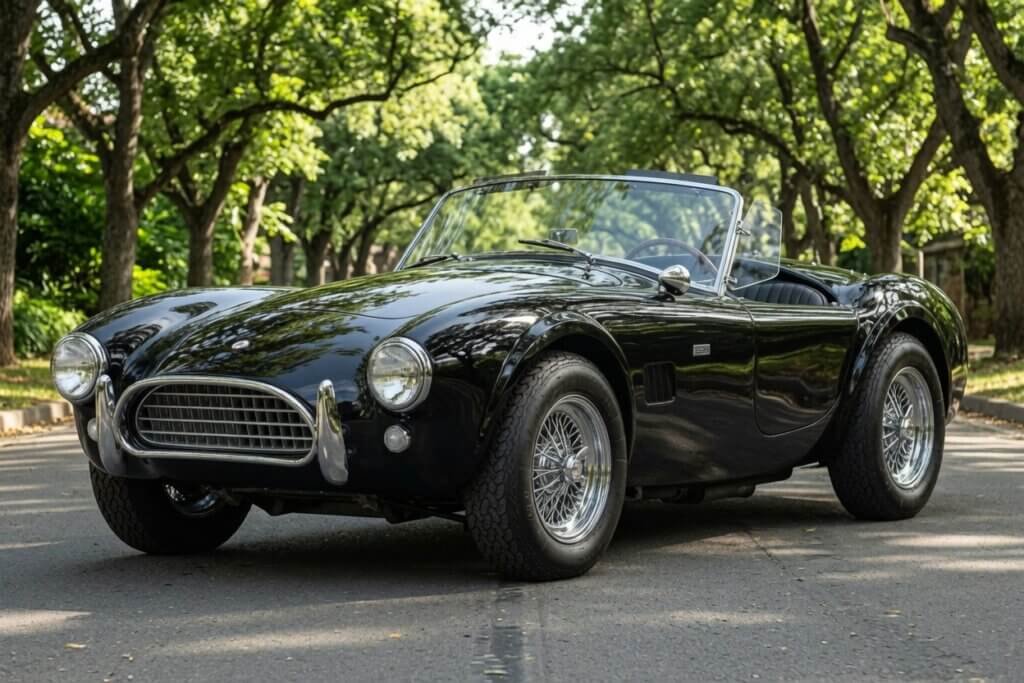
By the early 1960s, Carroll Shelby had already earned widespread respect as one of America’s most accomplished racing drivers. Having conquered some of motorsport’s greatest challenges, Shelby turned his attention toward an even more ambitious goal: creating a sports car that would combine European handling finesse with American V-8 performance. Inspired by the remarkable blend of lightweight agility and brute force found in the Cad-Allard specials he had driven, Shelby envisioned a machine that would outperform established competitors on both road and track.
Design Collaboration
To bring this concept to life, Shelby partnered with AC Cars of Thames Ditton, England. AC’s Ace roadster provided the perfect foundation, featuring a lightweight tubular chassis and hand-formed aluminum bodywork renowned for its balance, responsiveness, and success in European competition. Shelby’s next challenge was securing a suitable powerplant. Seeking the reliability and muscle of an American V-8, he convinced Ford Motor Company to supply its compact 260-cubic-inch engine. The marriage of AC’s lightweight sports car architecture and Ford’s potent V-8 would become one of the most celebrated collaborations in automotive history.
Launch
The result made its public debut in 1962 when a striking yellow prototype appeared at the New York Auto Show. Designated chassis CSX 2000, the car immediately captured the imagination of enthusiasts and journalists alike. Equipped with a four-speed manual transmission and weighing approximately 2,100 pounds, the prototype demonstrated exceptional performance potential. Shelby personally promoted and campaigned the car throughout the United States, showcasing its unique combination of speed, handling, and character.
We discreetly source and place vehicles of this calibre for private clients.
Design Objectives
Never content to stand still, Shelby introduced significant improvements the following year with the arrival of the Cobra Mk II. Among the most important upgrades was the adoption of rack-and-pinion steering, which dramatically enhanced precision and driver confidence. Power also increased substantially thanks to Ford’s high-performance 289-cubic-inch V-8, rated at 271 horsepower in street trim. The lightweight roadster could accelerate from 0 to 60 mph in well under six seconds and achieve speeds approaching 130 mph. This remarkable power-to-weight ratio established the Cobra as one of the fastest production sports cars of its era and helped cement Carroll Shelby’s legacy as one of America’s most influential automotive visionaries.
Factory Accessories
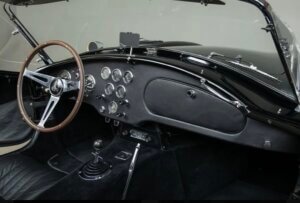
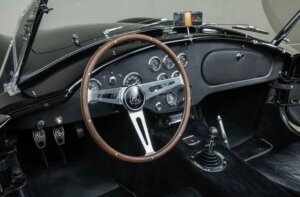
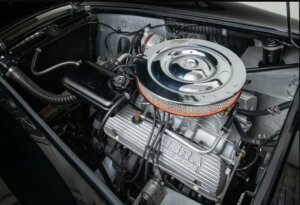
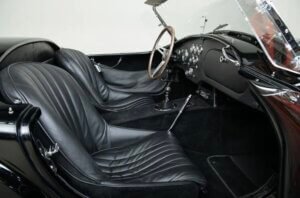
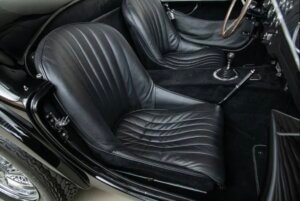
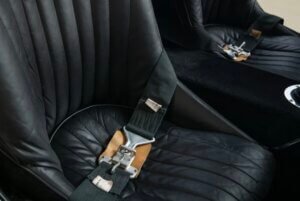
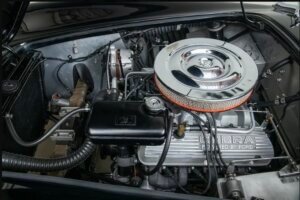
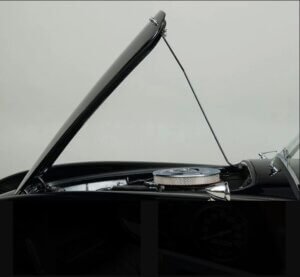
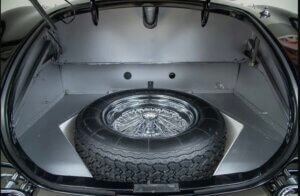
From new, CSX 2208 was specified with a desirable selection of factory accessories. These included polished aluminum Cobra valve covers, chrome-plated 60-spoke wire wheels fitted with elegant whitewall tires, and an exterior luggage rack. With these options included, the car carried a suggested retail price of $5,584.05—a significant figure at the time but a modest sum considering the legend it would become.
Shelby's Vision
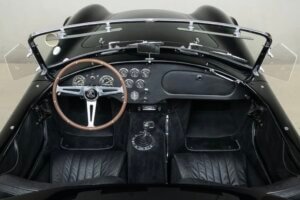
Among Cobra enthusiasts, the 289-powered cars are often regarded as the purest expression of Shelby’s original vision. Their lighter weight, balanced handling characteristics, and engaging driving dynamics distinguish them from the later big-block variants. With a fully documented ownership history, decades of continuous stewardship, and an exacting restoration completed to factory standards, CSX 2208 represents an exceptional opportunity to acquire one of the most iconic American sports cars ever built.
Cobra's Power
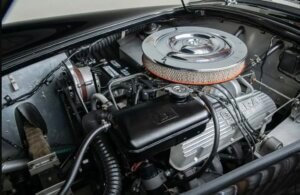
Powering the 1964 Shelby Cobra Mk II was Ford’s legendary 289-cubic-inch (4.7-liter) Windsor V-8, an engine celebrated for its durability, responsiveness, and impressive performance. In standard street configuration, output was rated at 271 horsepower at 6,000 rpm, while competition-prepared FIA-specification cars could exceed 300 horsepower. Torque was approximately 312 lb-ft, providing abundant acceleration across the rev range. Most street examples utilized a single four-barrel carburetor, while racing versions frequently employed dual four-barrel setups or Weber carburetors for increased performance. Power was delivered through a Borg-Warner T-10 four-speed manual transmission, creating a driving experience that remains thrilling even by modern standards.
Cobra's Performance
Performance figures were extraordinary for the period. The lightweight Cobra could sprint from 0 to 60 mph in approximately 5.2 seconds and achieve a top speed approaching 155 mph, placing it among the fastest production automobiles of its generation. These numbers, combined with the car’s compact dimensions and race-bred chassis, helped establish the Cobra as an automotive icon.
Summary
Production numbers were exceptionally limited. Across all variants, fewer than 1,000 original Shelby Cobras were built between 1961 and 1968, with approximately 580 examples equipped with the 289 V-8 during the 1963–1965 production period. Their scarcity, competition pedigree, and enduring cultural significance have made original examples among the most sought-after collector automobiles in the world. Today, authentic 1964 Shelby 289 Cobras with documented provenance and high-quality restorations commonly command values ranging from $1 million to $1.5 million, while historically significant competition cars and factory-backed race examples can achieve substantially higher prices at auction.