Porsche 911 Carrera RS 2.7
Available To Source
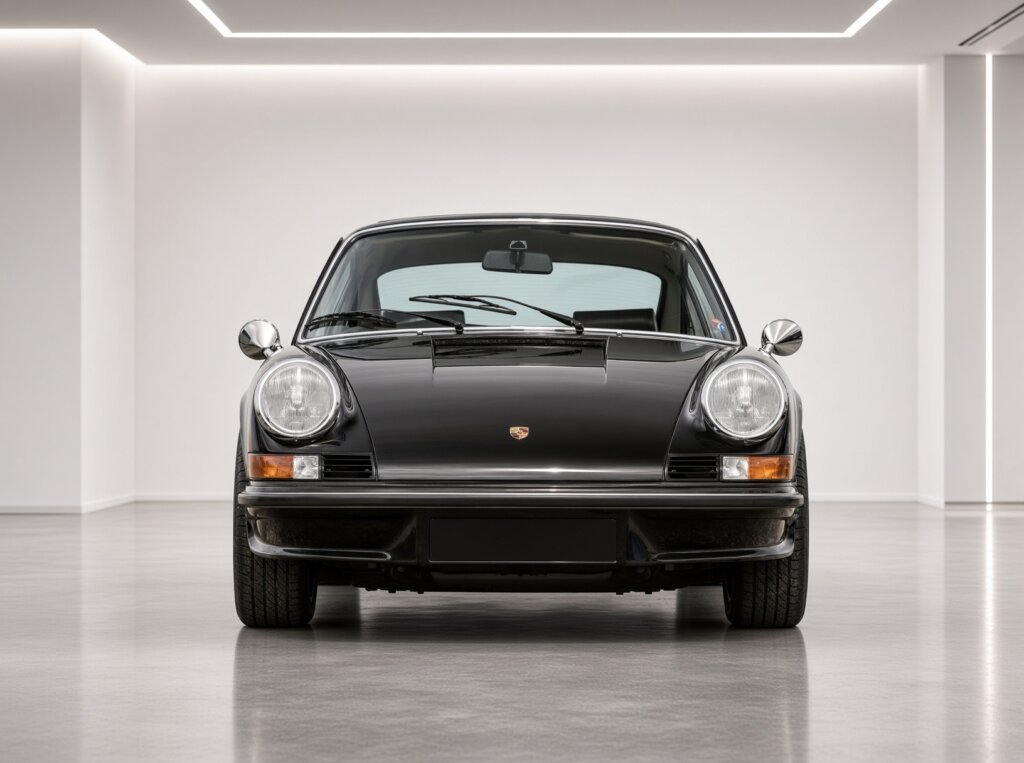
We discreetly source and place vehicles of this calibre for private clients.
Porsche 911 Carrera RS 2.7
Pure Performance. Racing Pedigree. An Enduring Legend.
The Birth of the Rennsport Icon
Some automobiles are remembered for their speed. Others become celebrated for their beauty, engineering or motorsport achievements. The Porsche 911 Carrera RS 2.7 commands admiration on every level.
Introduced in 1972, the Carrera RS 2.7 was developed as a road-legal homologation special, created to provide Porsche with a competitive foundation for international GT racing. Its philosophy was refreshingly direct: increase performance, reduce weight and refine aerodynamics without compromising the essential character of the 911.
The result was one of the most influential sports cars of its generation. With its air-cooled flat-six engine, unmistakable rear spoiler and purposeful wide-arched bodywork, the RS 2.7 established a formula that continues to define Porsche’s most focused road cars.
More than five decades later, it remains a benchmark for lightweight performance and one of the most desirable classic 911s ever produced.
Design & Aerodynamics — The Iconic Ducktail
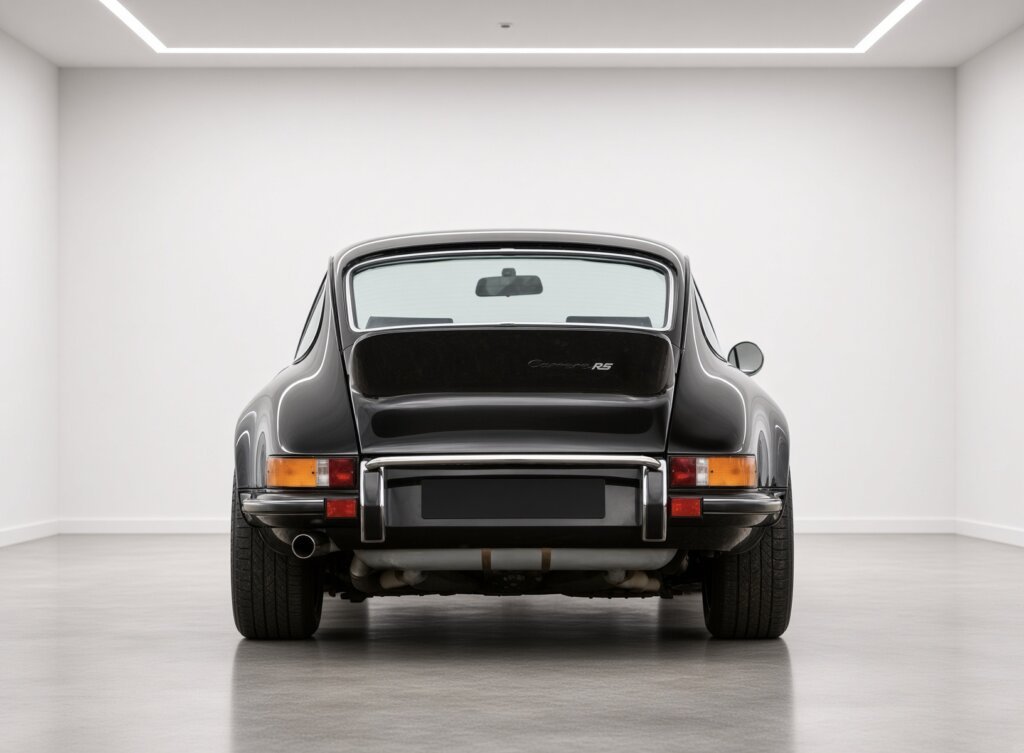
The Carrera RS 2.7’s design is a masterclass in functional elegance. Its familiar 911 silhouette was transformed through wider rear wheel arches, revised front aerodynamics and a distinctive raised rear spoiler that became known as the ducktail.
This was not merely a styling flourish. Porsche engineers developed the spoiler to reduce aerodynamic lift at the rear, helping the car remain more stable at speed. Together with the front aerodynamic refinements, it represented a pioneering application of aerodynamic thinking to a series-production sports car.
The result was an exterior in which every major detail served a purpose. The widened body accommodated larger rear wheels and tyres, while the lowered visual stance communicated the car’s competition ambitions. Contrasting Carrera lettering along the flanks provided a distinctive graphic signature that remains instantly recognisable.
Available in a striking palette of period colours, often paired with contrasting graphics and wheels, the RS 2.7 offered an unusually expressive combination of engineering restraint and visual confidence.
Its proportions have aged exceptionally well. The car looks purposeful without excess, demonstrating that genuine sporting design can be both beautiful and technically intelligent.
Design Objective — Lightweight Engineering Without Compromise
The RS 2.7 was conceived under a clear brief: create a fast, light and reliable 911 capable of competing in motorsport while remaining suitable for road use.
Porsche’s engineers concentrated on the fundamentals. Weight was reduced where practical, the chassis was revised to improve handling, and the engine received a substantial increase in capacity. Wider rear wheels enhanced traction, while carefully developed suspension settings helped the car respond with greater precision.
Two principal road-going configurations were offered. The M472 Touring retained more of the comfort and equipment expected of a road car, while the M471 Sport, commonly known as the Lightweight, placed greater emphasis on reducing mass and sharpening the driving experience.
Both versions embodied the same philosophy: performance was not achieved through sheer power alone, but through the intelligent balance of weight, chassis, aerodynamics and mechanical response.
Engine & Performance — The Air-Cooled Flat-Six
At the heart of the Carrera RS 2.7 is a 2,687cc air-cooled, horizontally opposed six-cylinder engine. Developed from Porsche’s established flat-six architecture, it combined increased displacement with Bosch mechanical fuel injection to deliver strong performance and immediate throttle response.
The engine produced approximately 210 PS at 6,300 rpm and was paired with a five-speed manual gearbox. Its distinctive flat-six soundtrack, linear delivery and willingness to rev made it central to the car’s character.
With a lightweight body and a carefully developed chassis, the RS 2.7 delivered performance that was exceptional for the early 1970s. Contemporary figures placed acceleration from 0–100 km/h at approximately 5.8 seconds, with a maximum speed of around 245 km/h (152 mph).
Key Performance Specifications
- Engine: 2,687cc air-cooled flat-six
- Engine position: Rear-mounted
- Power output: 210 PS (approximately 207 bhp) at 6,300 rpm
- Torque: Approximately 255 Nm at 5,100 rpm
- Fuel system: Bosch mechanical fuel injection
- Transmission: Five-speed manual
- Drive: Rear-wheel drive
- Suspension: Independent front suspension; rear suspension using torsion bars
- Brakes: Four-wheel disc brakes
- Sport-version weight: Approximately 960 kg, with figures varying by specification and measurement method
- Top speed: Approximately 245 km/h (152 mph)
These specifications describe the original Carrera RS 2.7, rather than later 911 RS models or modern commemorative editions.



History & Motorsport Heritage — The Meaning of RS
The letters RS stand for Rennsport, meaning motor racing. For the Carrera RS 2.7, they represented a direct connection between Porsche’s competition ambitions and its road-car engineering.
The model made its world premiere at the Paris Motor Show on 5 October 1972. Porsche initially planned to build just 500 examples to satisfy homologation requirements for Group 4 competition. Demand quickly exceeded expectations, and production expanded substantially.
By the end of the 1972–73 production period, Porsche had built 1,580 Carrera RS 2.7 cars across the various versions. This included the highly sought-after Lightweight configuration, of which approximately 200 were built in the M471 specification, alongside the more extensively equipped Touring cars and competition-oriented variants.
The RS 2.7 became a foundation for Porsche’s subsequent racing and road-going RS models. Its engineering principles — light weight, a responsive naturally aspirated engine, carefully tuned chassis dynamics and purposeful aerodynamics — became enduring elements of the marque’s performance identity.
The car’s significance is therefore greater than its production numbers suggest. It established a philosophy that Porsche continues to revisit whenever it creates a particularly focused 911.

The Driving Experience — A Direct Connection to the Road
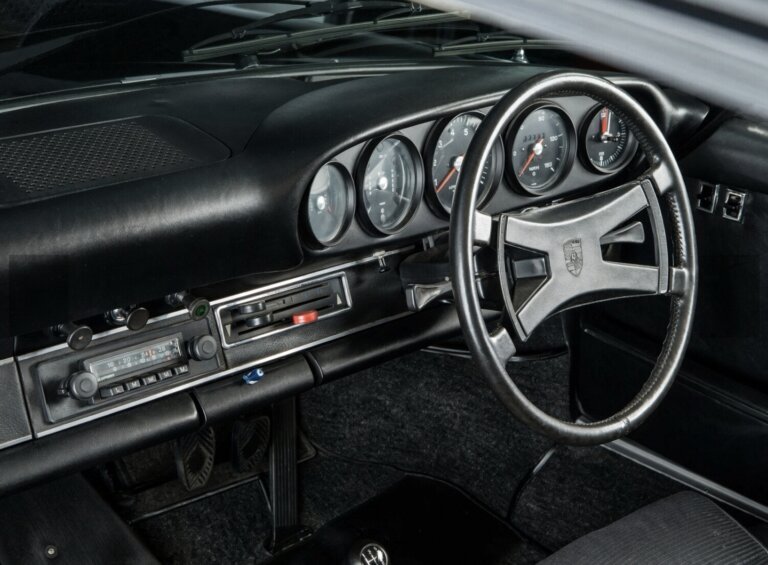
The appeal of the Carrera RS 2.7 lies in the way its elements work together. Its relatively modest mass allows the 2.7-litre flat-six to feel lively and responsive, while the manual gearbox encourages an involved driving style.
The steering, suspension and rear-engine layout demand engagement from the driver. Rather than relying on electronic systems to manage every movement, the RS communicates through mechanical feedback, weight transfer and the unmistakable character of its air-cooled engine.
The Touring version offers a more accommodating interpretation of the concept, while the Lightweight places greater emphasis on immediacy and reduced mass. Both deliver the essential RS experience: a classic sports car engineered around the relationship between driver, road and machine.
It is this clarity of purpose that makes the Carrera RS 2.7 so compelling. Its performance is not defined by a single headline figure, but by the coherence of the entire driving experience.
Collectibility & Investment Appeal — A Blue-Chip Porsche
The Carrera RS 2.7 occupies an exceptional position in the classic Porsche market. It was the first 911 to carry the Carrera name and one of the earliest models to establish the Rennsport formula that has since become central to Porsche’s sporting heritage.
Its desirability is driven by several factors:
- Historical importance: A defining homologation special from Porsche’s early 911 era.
- Limited production: Just 1,580 cars across the model family, with the Lightweight representing a much smaller proportion.
- Iconic design: The ducktail spoiler, wider rear arches and Carrera graphics create one of the most recognisable silhouettes in automotive history.
- Driving character: A naturally aspirated, air-cooled flat-six paired with a manual gearbox and a relatively low vehicle weight.
- Authenticity: Matching-numbers components, factory specification, original colours and documented history can significantly influence desirability.
- Motorsport provenance: Period competition history may add substantial interest, provided it is properly documented.
The distinction between Touring and Lightweight models is especially important. Both are collectible, but the Lightweight’s reduced production and more focused specification can command a substantial premium when condition and provenance are comparable.
Market Value & Auction Perspective
The Carrera RS 2.7 is an established high-value collector car, with prices influenced by specification, originality, restoration quality, provenance and the individual car’s history.
Illustrative market positioning:
- Touring (M472): Desirable examples can command several hundred thousand pounds, with exceptional cars achieving higher prices.
- Lightweight (M471): Frequently valued at a significant premium over comparable Touring cars, with exceptional examples reaching seven-figure sums in major international markets.
Recent auction results demonstrate this variation. In November 2024, a right-hand-drive 1973 Carrera RS 2.7 Touring sold at RM Sotheby’s London for £483,125. In February 2025, a 1973 Carrera RS 2.7 Lightweight sold at RM Sotheby’s Paris for €713,750. These are individual sale results, not universal valuations for every car.
For an accurate valuation, a specialist should confirm the chassis identity, engine and gearbox numbers, factory build specification, originality of bodywork, restoration records and any competition history. Auction results should always be considered alongside the specific condition and provenance of the vehicle being assessed.
The Monaco Classic Cars Perspective
The Porsche 911 Carrera RS 2.7 represents a rare point of balance between competition engineering and road-going usability. It is fast without relying on excess, visually distinctive without unnecessary ornament, and technically sophisticated without losing the direct mechanical character that defines a classic sports car.
Its ducktail spoiler became an icon. Its flat-six engine established a lasting benchmark. Its lightweight construction and focused chassis helped shape generations of Porsche RS models.
For the discerning collector, the Carrera RS 2.7 is more than a desirable vintage Porsche. It is a foundational chapter in the history of the 911 — an automobile that demonstrates how intelligence, restraint and engineering discipline can create something truly timeless.
Porsche 911 Carrera RS 2.7 — engineered for the circuit, perfected for the road, destined for legend.


Location Europe
We discreetly source and place vehicles of this calibre for private clients.
This page is for general information only and is not financial advice. Values vary widely by chassis, history and condition.