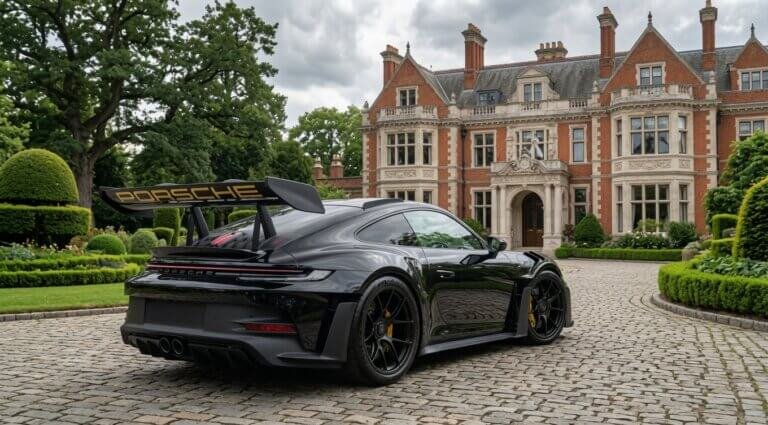
Porsche 911 GT3 RS
FOR SALE
The Pinnacle of Road-Legal Motorsport Engineering
Engineering Excellence
The Porsche 911 GT3 RS represents the closest a production, road-legal Porsche has come to a purpose-built race car. Every system, every component, and every aerodynamic surface has been engineered with one uncompromising objective: achieving the fastest possible lap time.
Aerodynamic Architecture
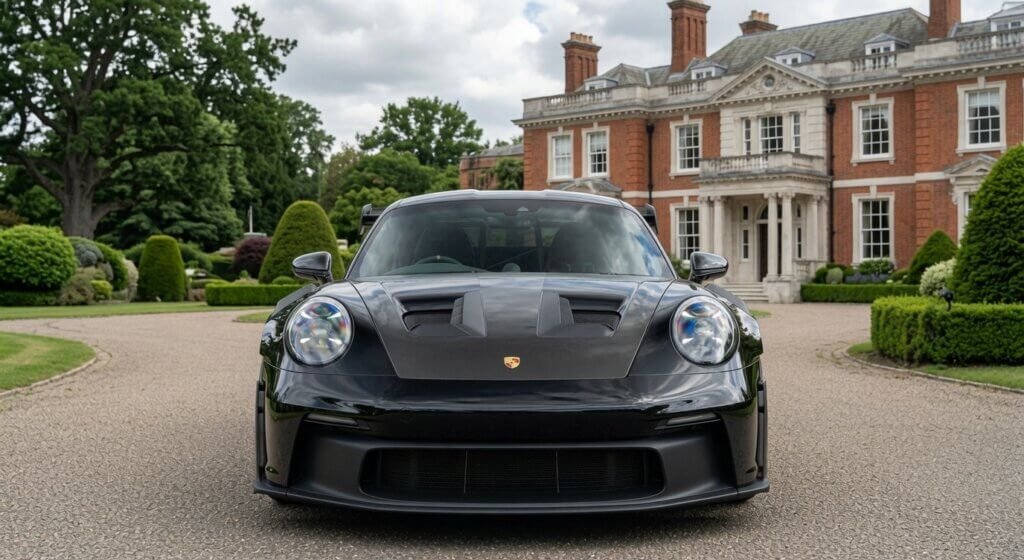
The defining innovation of the 992-generation GT3 RS is its radically re-engineered aerodynamic package. In place of the traditional front luggage compartment sits a centrally mounted radiator inspired by endurance racing, allowing substantially larger front aerodynamic elements and vastly improved airflow management beneath the vehicle.
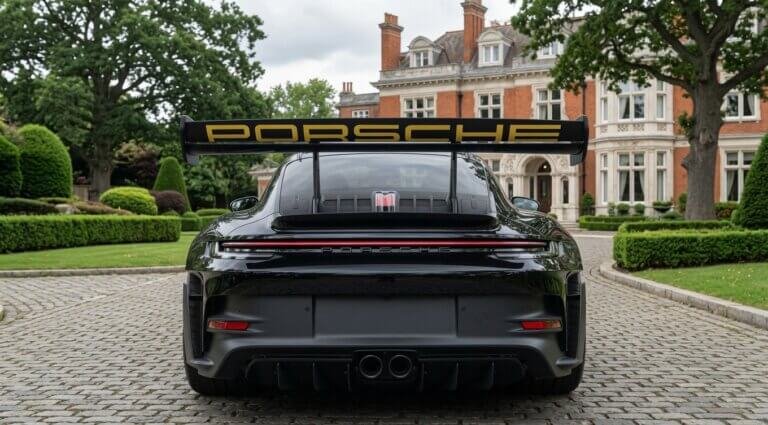
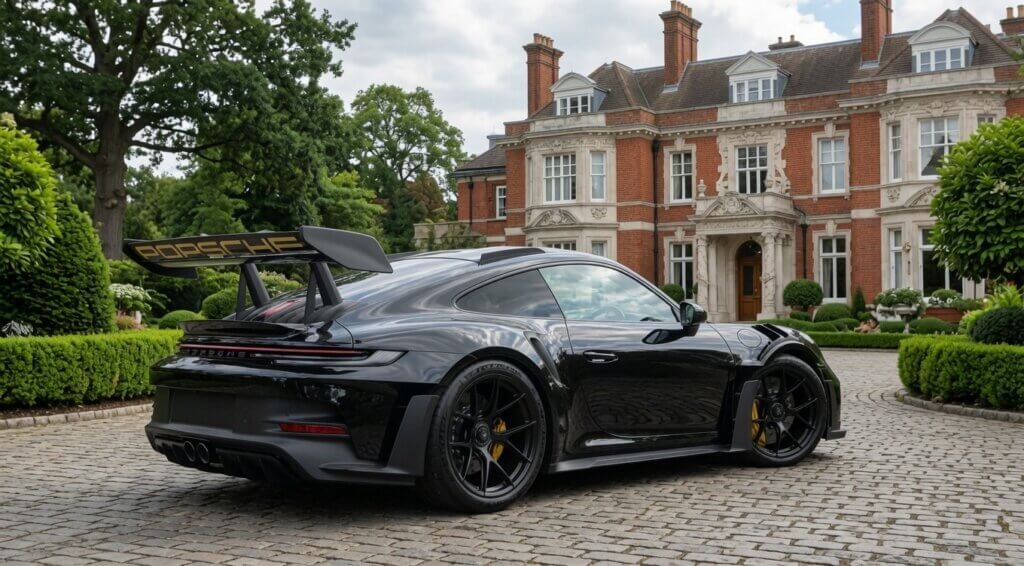
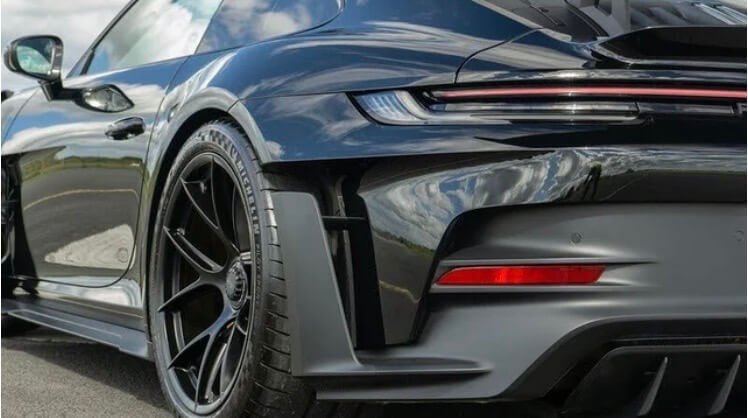
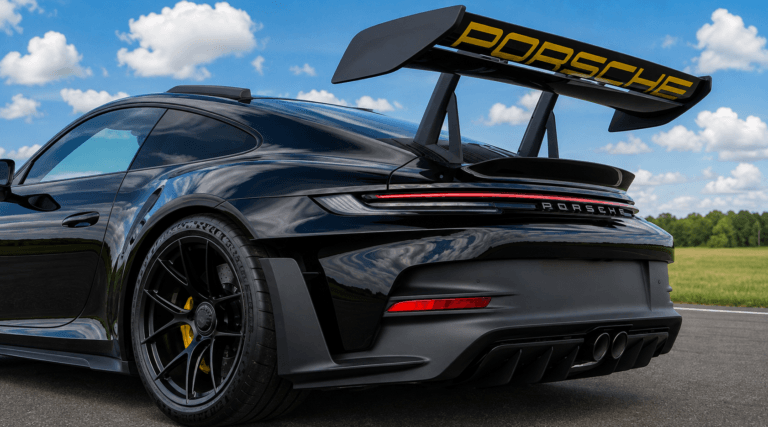
A dramatically enlarged front splitter, active underbody diffuser, and motorsport-derived “swan-neck” mounted rear wing work together to generate extraordinary aerodynamic efficiency. By mounting the rear wing from above, airflow beneath the wing remains undisturbed, maximizing downforce while minimizing aerodynamic losses.
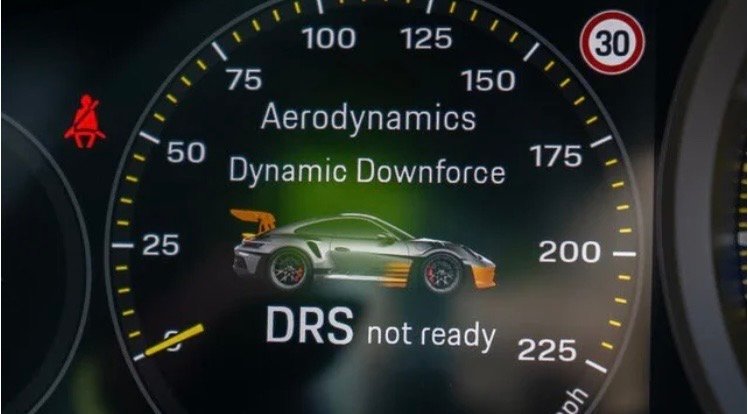
The result is an astonishing 860 kg (1,895 lbs) of downforce at 285 km/h (177 mph)—approximately twice that of the previous-generation GT3 RS.
We discreetly source and place vehicles of this calibre for private clients.
Drag Reduction System (DRS)
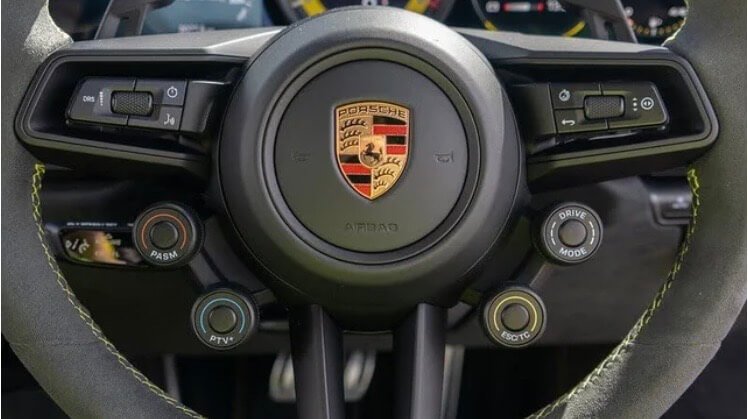
Borrowed directly from modern Formula 1 principles, the GT3 RS incorporates an active Drag Reduction System. At the press of a steering wheel-mounted button—or automatically in Track mode—the front and rear aerodynamic elements flatten on high-speed straights to reduce drag and increase acceleration. Under braking or corner entry, the system immediately restores maximum aerodynamic load, delivering exceptional stability and confidence at the limit.
Chassis & Suspension
The GT3 RS employs one of the most sophisticated chassis systems ever fitted to a production Porsche.
- Double-wishbone front suspension derived from the Porsche 911 RSR race car for exceptional wheel control and steering precision
- Multi-link rear suspension with integrated rear-wheel steering
- Driver-adjustable dampers, front and rear anti-roll bars, Porsche Torque Vectoring (PTV), and electronically controlled differential lock—all adjustable in real time via steering wheel-mounted rotary controls without removing the driver’s hands from the wheel
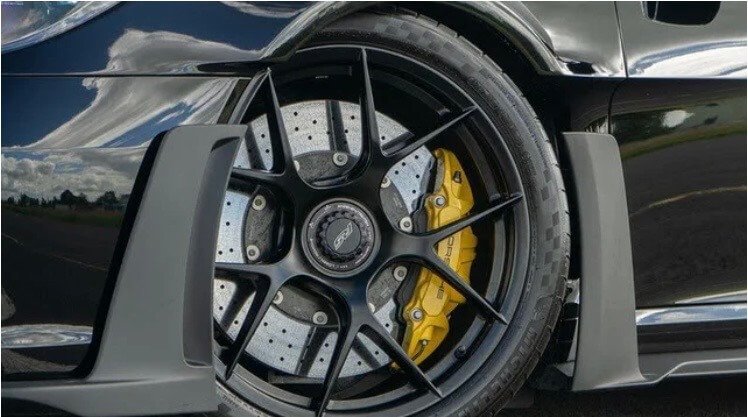
- Porsche Ceramic Composite Brakes (PCCB) fitted as standard
Lightweight Construction
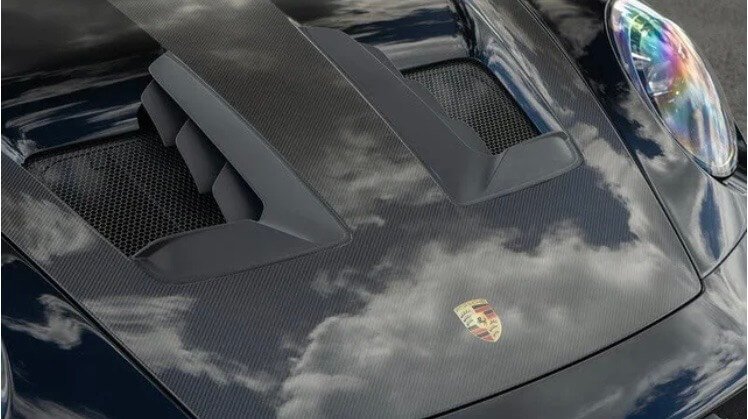
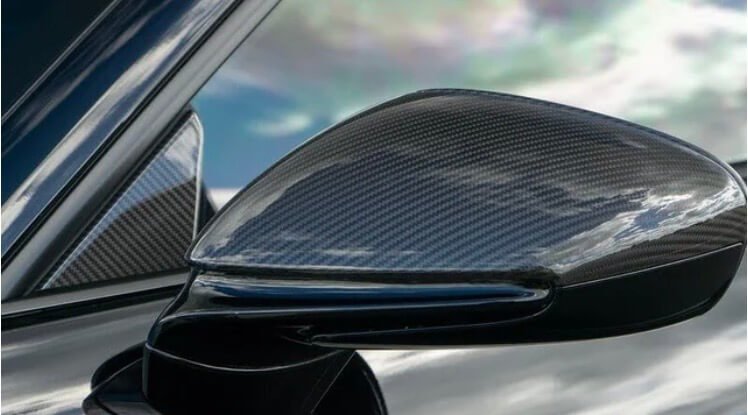
Weight reduction remains fundamental to the GT philosophy. Extensive use of carbon fiber-reinforced plastic (CFRP) for the roof, front lid, front fenders, doors, rear wing, and numerous structural components is complemented by lightweight glass and a purpose-focused interior.
Despite carrying one of the most advanced aerodynamic packages ever installed on a production sports car, the GT3 RS maintains a remarkably competitive dry weight, preserving the agility and responsiveness for which Porsche GT cars are renowned.
Design Philosophy
The GT3 RS embodies Porsche Motorsport’s enduring philosophy: form exists to serve function.
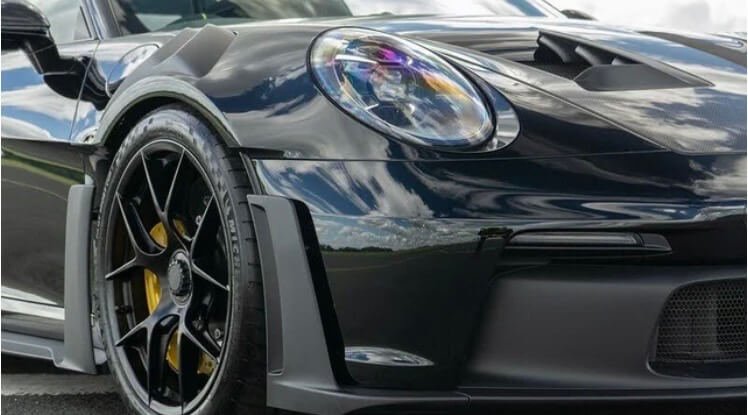
Every visible surface has a purpose. Louvered front fenders extract wheel-arch pressure, exposed carbon-fiber wing supports optimize airflow, and the centrally mounted radiator vents maximize cooling efficiency. Nothing is decorative; every element contributes to aerodynamic performance, thermal management, or weight reduction.
The resulting appearance is undeniably aggressive—not because it was designed to be visually dramatic, but because uncompromising engineering naturally produces purposeful design.
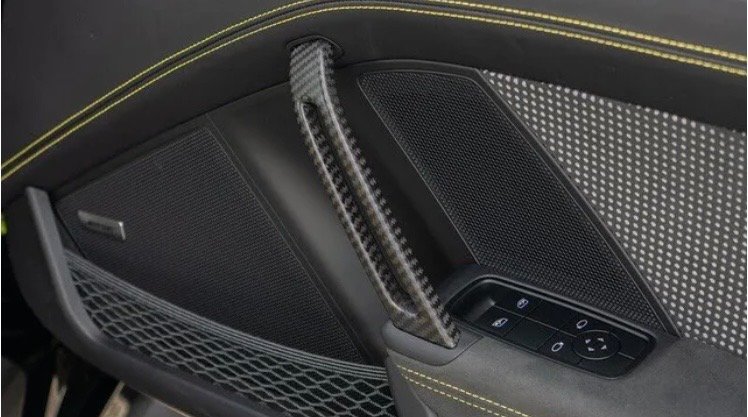
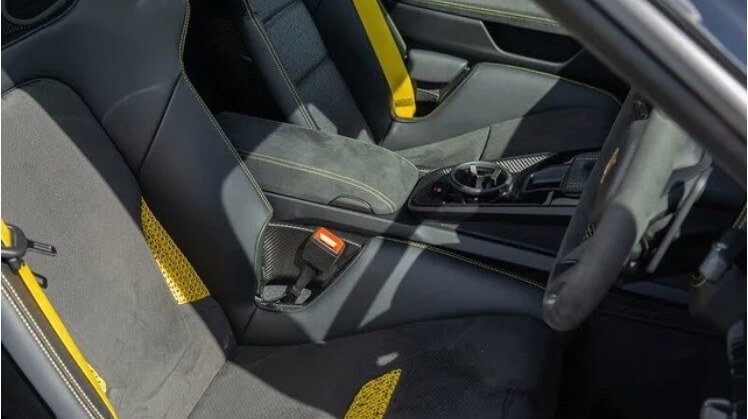
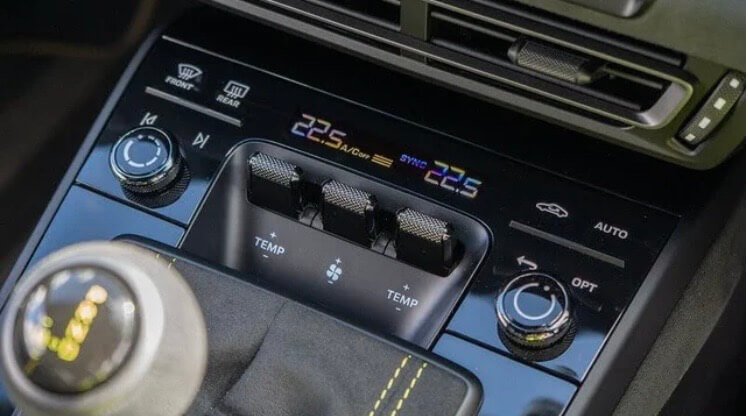
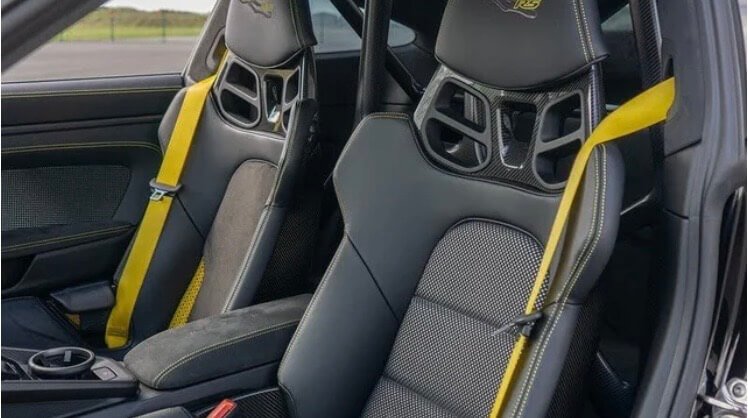
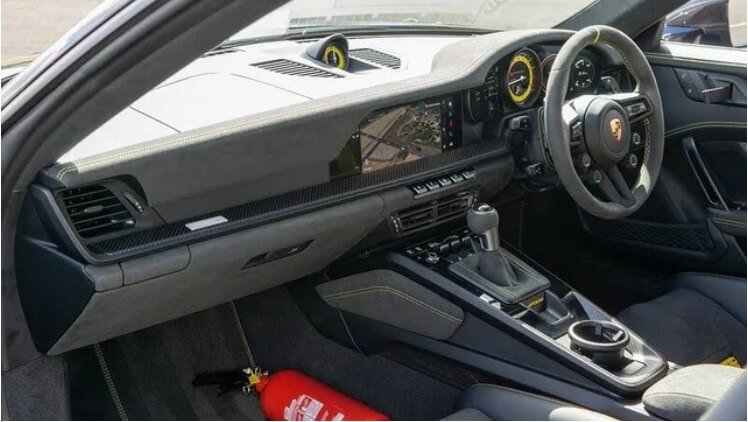
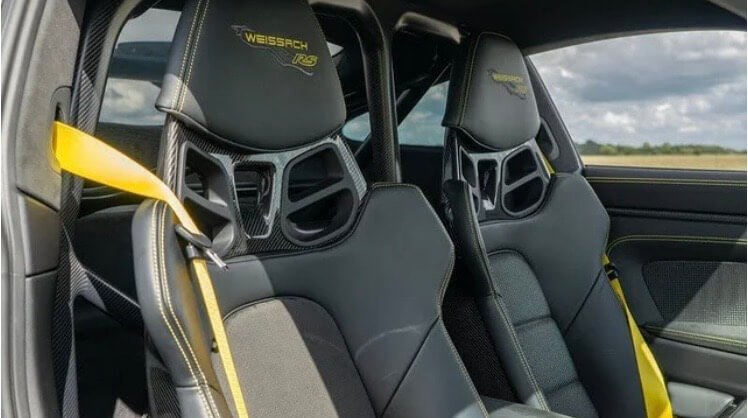
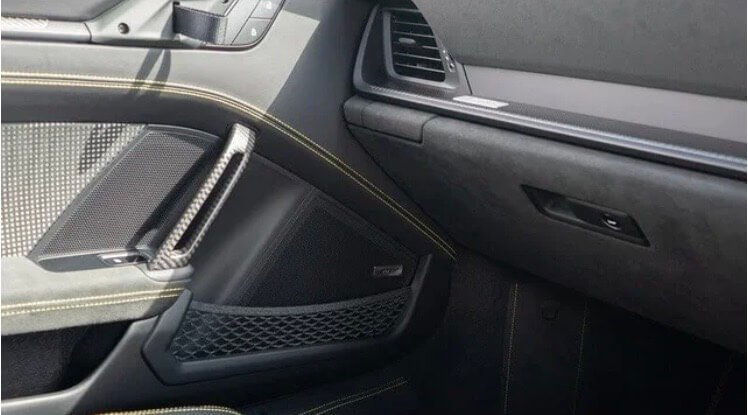
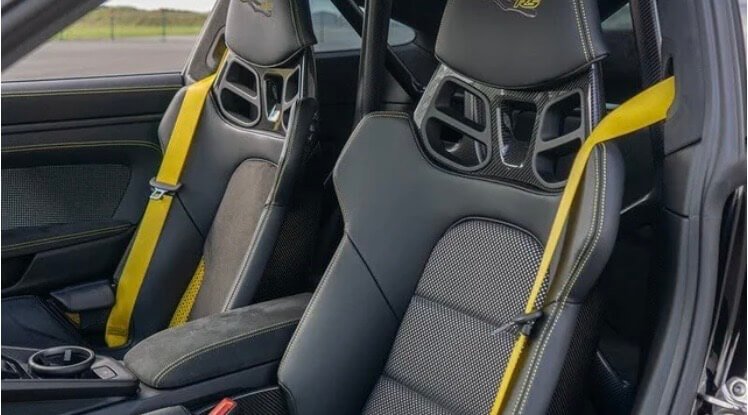
Inside, the cabin reflects the same philosophy. Lightweight full bucket seats, fabric door pulls replacing conventional handles, optional carbon-fiber racing buckets, half-roll cage preparation, and integrated six-point harness provisions emphasize function above luxury.
The RS designation—short for Rennsport (“Racing Sport”)—signifies a machine developed first for the racetrack, and only secondarily adapted for public roads.
Exclusivity & Production
The GT3 RS occupies the pinnacle of Porsche’s GT model range, with production intentionally limited to preserve its exclusivity and engineering significance.
Key characteristics include:
- Developed by Porsche’s GT division in Weissach and assembled in Zuffenhausen using specialized GT production processes
- Allocation-based ordering, with dealerships receiving only a limited number of annual build slots
- Priority typically given to long-standing Porsche customers with established ownership history
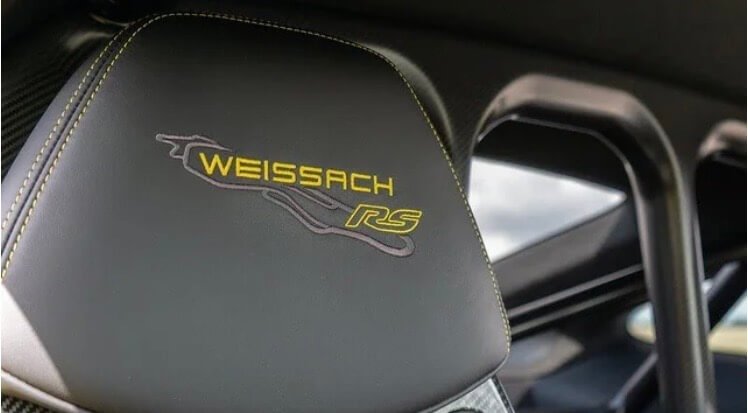
- Optional Weissach Package featuring magnesium wheels, additional carbon-fiber structural components, carbon-fiber anti-roll bars, carbon-fiber roll cage, and carbon PDK shift paddles
- Delivery timelines frequently extending from one to several years depending on allocation and market demand
- Exclusively equipped with Porsche’s seven-speed PDK dual-clutch transmission, chosen for maximum performance and lap-time optimization
The absence of a manual gearbox reflects Porsche’s unwavering focus on measurable performance rather than nostalgic driving ritual.
Engine Specifications
| Specification | Detail |
|---|
| Configuration | Naturally aspirated rear-mounted flat-six (boxer) |
| Displacement | 4.0 litres (3,996 cc) |
| Output | 518 hp (525 PS) |
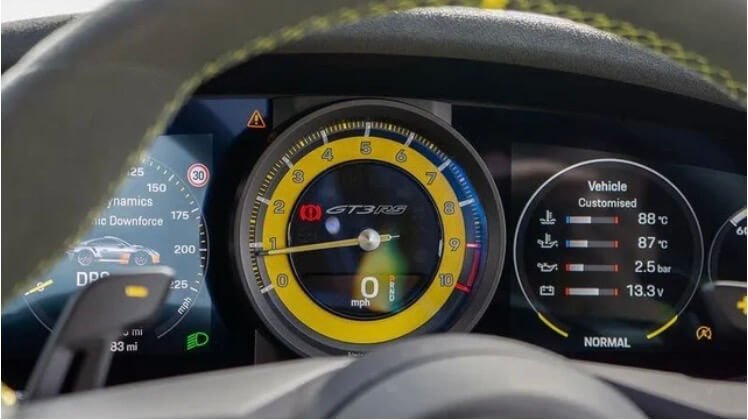
| Redline | 9,000 rpm |
| Induction | Individual throttle bodies with direct fuel injection |
| Transmission | Seven-speed PDK dual-clutch |
| Drivetrain | Rear-wheel drive |
| Engine Heritage | Architecture shared with the Porsche 911 GT3 Cup racing engine, adapted for road use and emissions compliance |
The engine shares much of its architecture with Porsche Motorsport’s GT racing programs and is developed alongside the company’s competition engines before being refined to meet the durability, drivability, and emissions requirements of road use.
Its naturally aspirated character, razor-sharp throttle response, and 9,000-rpm redline make it one of the last truly uncompromising high-revving performance engines available in a production automobile.
Performance
| Metric | Figure |
| 0–60 mph | 3.0–3.2 seconds |
| Top Speed | 184 mph (296 km/h) |
| Nürburgring Nordschleife (20.832 km) | 6:44.848 |
| Peak Downforce | 860 kg (1,895 lbs) at 285 km/h |
| Braking System | Porsche Ceramic Composite Brakes (PCCB), standard |
The GT3 RS records a lower maximum speed than the standard 911 GT3 by deliberate engineering choice. Porsche accepted reduced straight-line speed in exchange for dramatically increased aerodynamic load, allowing the car to carry significantly greater speed through corners and ultimately achieve substantially faster lap times on virtually every racing circuit.
Collector Status & Long-Term Appeal
Introduced with a U.S. starting price of approximately $223,800, the 992-generation GT3 RS has quickly established itself as one of Porsche’s most sought-after modern performance cars.
Several factors contribute to its enduring desirability:
- Limited allocation-based production maintaining demand well above supply
- One of the final naturally aspirated, high-revving production sports cars in an increasingly turbocharged and electrified automotive landscape
- Direct engineering transfer from Porsche’s factory motorsport programs
- Strong historical precedent established by previous GT3 RS generations, particularly low-mileage examples equipped with the Weissach Package
As with any collectible automobile, long-term values remain dependent upon production numbers, market conditions, specification, mileage, provenance, and broader collector demand. While previous GT3 RS models have demonstrated exceptional value retention, future appreciation can never be guaranteed.
The GT3 RS should first and foremost be regarded as an engineering masterpiece and an extraordinary driver’s machine, with any financial appreciation considered a secondary benefit.
Conclusion
The Porsche 911 GT3 RS is far more than a high-performance derivative of the iconic 911—it is Porsche Motorsport’s racing philosophy distilled into a road-legal automobile.
Its naturally aspirated flat-six engine, race-derived chassis, Formula 1-inspired active aerodynamics, and uncompromising focus on lap-time performance place it in a class occupied by very few production cars. Every design decision serves a measurable purpose, every component contributes to performance, and every innovation exists to bring the driver closer to the experience of a contemporary GT race car.
In an era increasingly defined by turbocharging, hybridization, and electrification, the 911 GT3 RS stands as one of the last great celebrations of naturally aspirated performance engineering. It is not simply one of Porsche’s finest road cars—it is a benchmark for modern driver-focused engineering and a future automotive icon.