Jaguar E Type Series 1
Available To Source
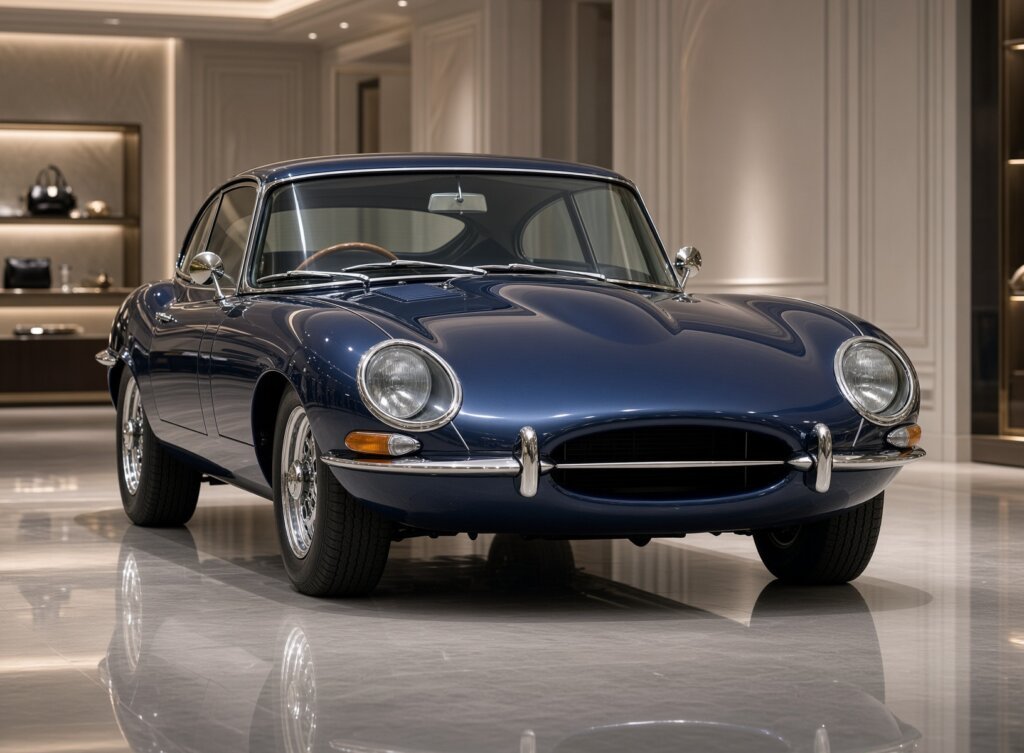
We discreetly source and place vehicles of this calibre for private clients.
Jaguar E-Type Series 1
The Shape That Defined an Era
1961–1968 | 3.8-litre & 4.2-litre XK Straight-Six | Up to 265 bhp | Roadster & Fixed-Head Coupé
Few automobiles have achieved the extraordinary combination of beauty, engineering significance and cultural influence of the Jaguar E-Type Series 1.
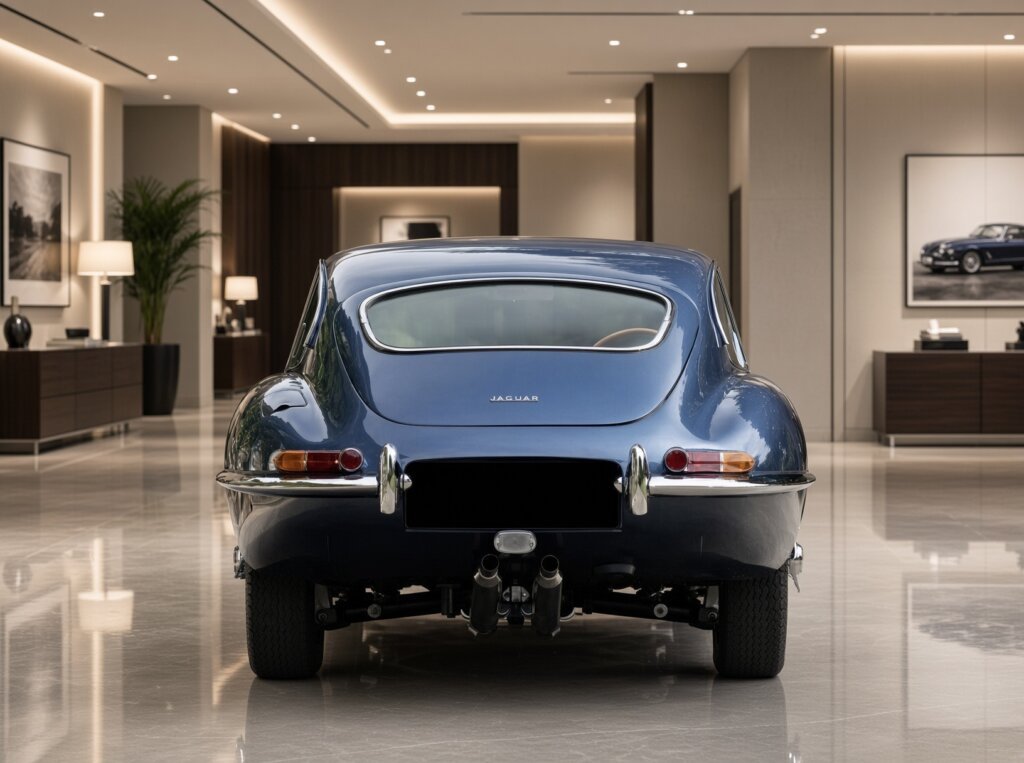
Unveiled at Geneva in March 1961, the E-Type immediately established itself as something different. Its impossibly long bonnet, low aerodynamic nose, flowing rear bodywork and compact cockpit gave it the appearance of a purpose-built competition machine, yet beneath its sculpted exterior was a sophisticated road car capable of crossing continents at remarkable speed.
The E-Type was not created simply to look beautiful. Its origins lay in Jaguar’s highly successful racing programme, and its engineering incorporated ideas developed through the company’s C-Type and D-Type competition cars. The result was a sports car that brought genuine racing technology to the road while retaining the refinement expected of a Jaguar. More than six decades later, the Series 1 remains one of the most recognisable and desirable British sports cars ever produced.
The Vision Behind the E-Type
The E-Type was conceived during one of the most successful periods in Jaguar’s history. The company’s C-Type had pioneered the use of disc brakes at Le Mans, while the D-Type had established Jaguar as one of the dominant forces in international endurance racing.
The next challenge was to translate that competition expertise into an entirely new road car. Jaguar’s engineers developed the E-Type around a philosophy of aerodynamic efficiency, structural strength, low weight and sophisticated suspension.
At the centre of the project was aerodynamicist Malcolm Sayer. Sayer’s background was particularly unusual for an automotive designer. Rather than approaching the automobile purely as an exercise in styling, he applied mathematical and aerodynamic principles developed through his engineering career and experience with Jaguar’s racing programme.
The result was a body in which beauty and function were inseparable. The E-Type looked extraordinary because its shape was engineered to work.
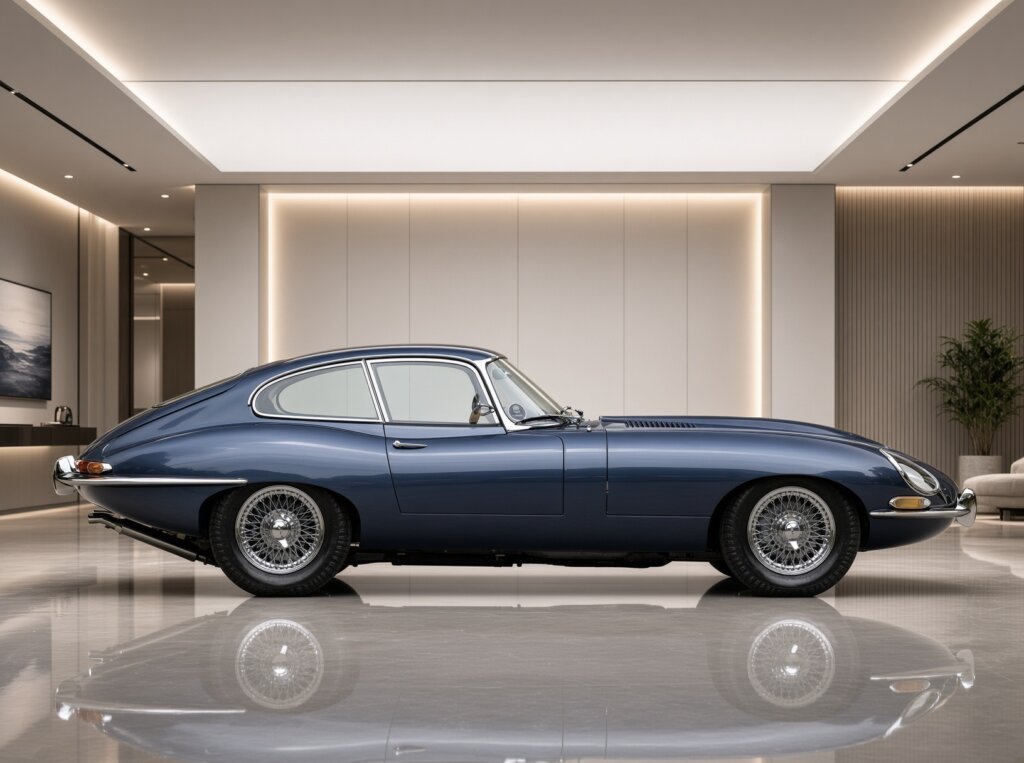
Malcolm Sayer’s Masterpiece
The E-Type’s proportions remain its most powerful signature.
The bonnet stretches forward from the cockpit in one uninterrupted sweep, while the nose drops dramatically towards the road. The passenger compartment is positioned well towards the rear, creating the impression that the driver sits almost directly over the rear axle.
The resulting silhouette is instantly recognisable.
Every surface contributes to the aerodynamic form.
The narrow frontal area reduces resistance, while the long bonnet provides space for the XK straight-six and its associated mechanical components. The tapered rear bodywork completes the flowing profile.
Sayer created an automobile that appeared to be moving even when stationary.
That is one of the reasons the E-Type remains so visually compelling today.
From D-Type to E-Type
The connection with Jaguar’s D-Type is fundamental to understanding the E-Type.
The D-Type’s lightweight structural concept, aerodynamic bodywork and sophisticated rear suspension provided important foundations for the new road car.
The E-Type developed these ideas into a more practical production architecture.
Its passenger compartment formed the principal monocoque structure, while a tubular front subframe carried the engine, steering and front suspension.
This approach provided considerable structural rigidity while allowing the engine and front mechanical components to be serviced as a separate assembly.
The E-Type was therefore not a conventional sports car wearing an exotic body.
Its architecture had been carefully engineered around performance.
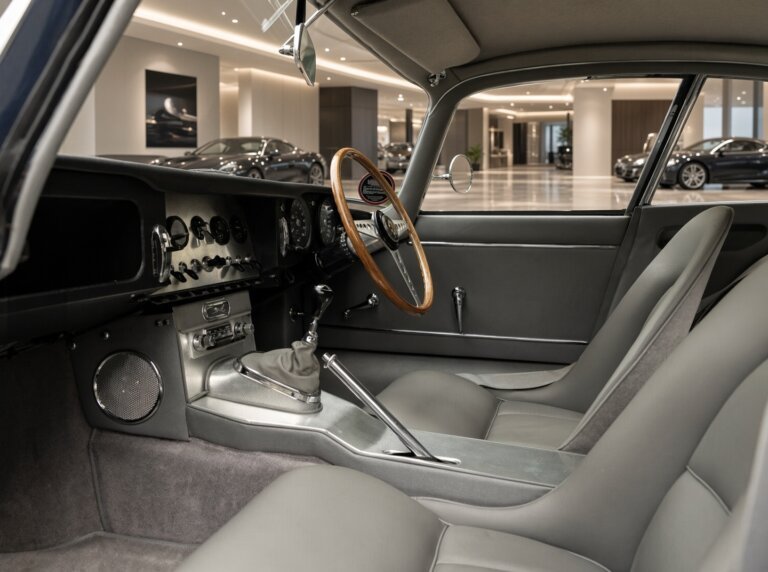
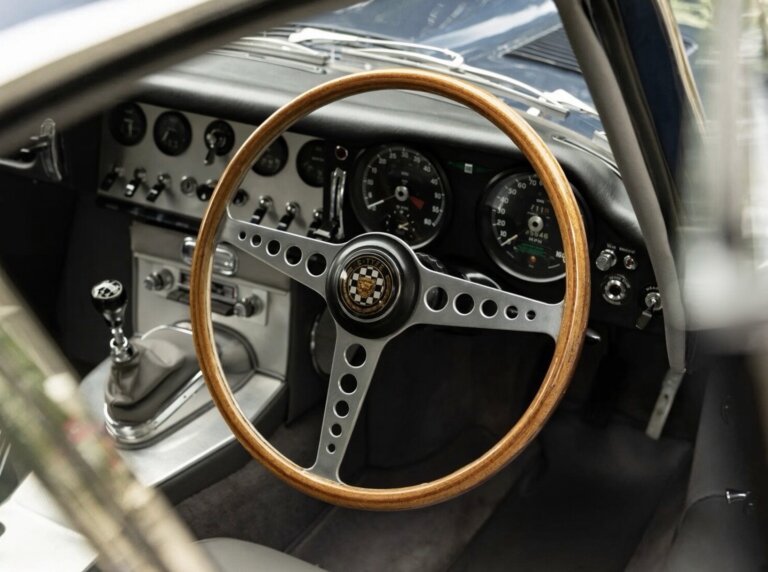

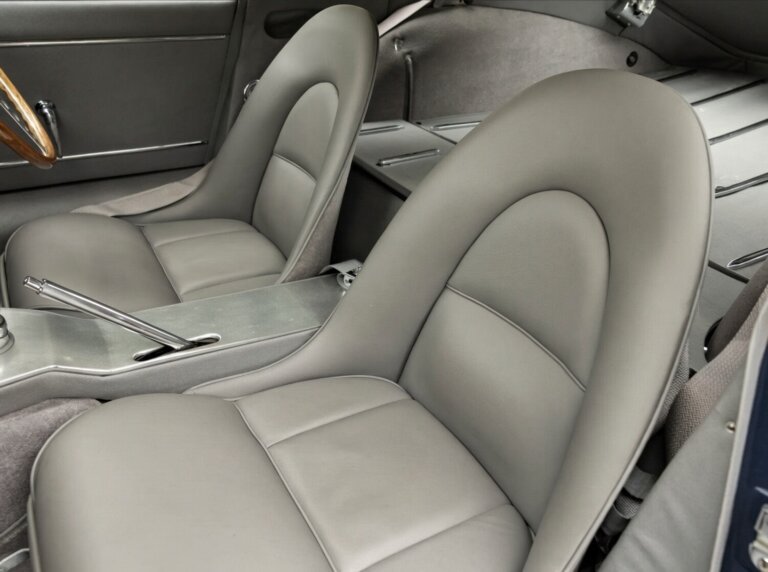
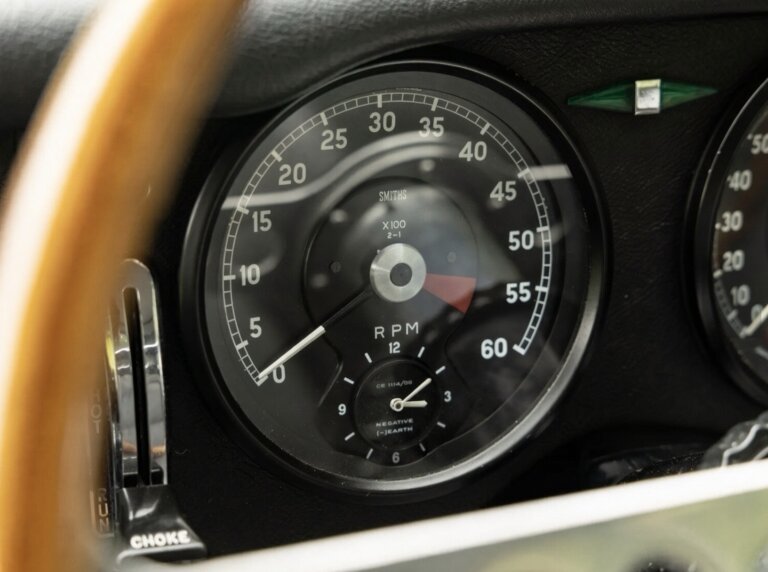
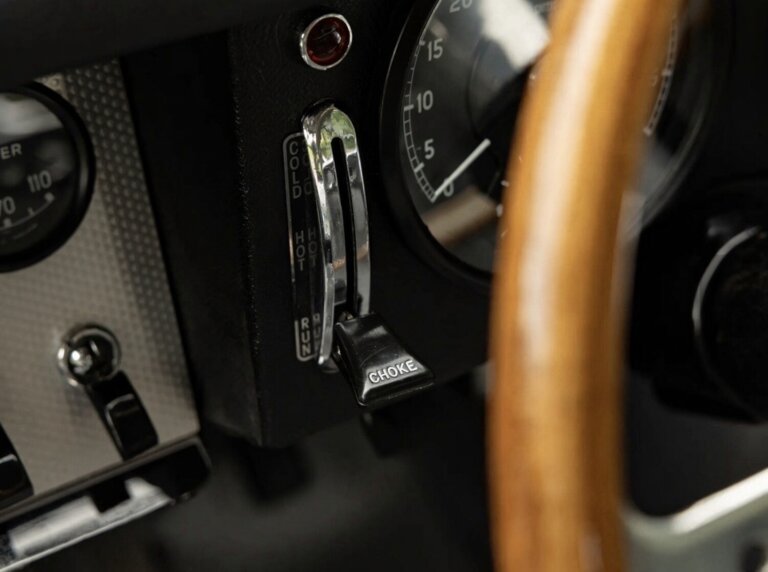
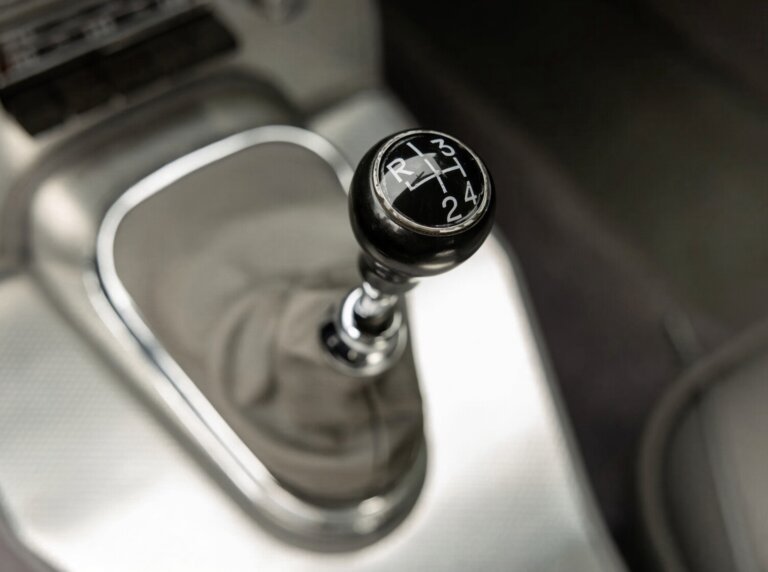
Design & Construction
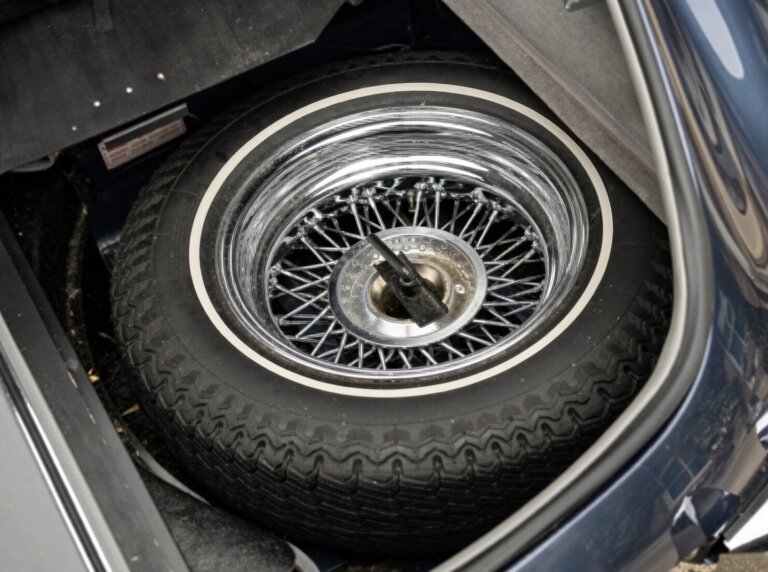
The E-Type’s construction was one of its most significant technical achievements. The central body utilised monocoque principles, with the structure itself contributing to the rigidity of the automobile. At the front, a tubular steel subframe supported the engine and front suspension.
At the rear was one of Jaguar’s greatest engineering innovations: its independent rear suspension system. Unlike many contemporary sports cars using a conventional live axle, the E-Type featured a sophisticated independent arrangement incorporating coil springs, dampers and inboard disc brakes. The entire rear assembly was mounted as a compact unit. This gave the E-Type impressive road-holding characteristics while also providing the refinement necessary for high-speed touring.
The Jaguar XK Straight-Six
Power came from one of the most celebrated engines in Jaguar history.
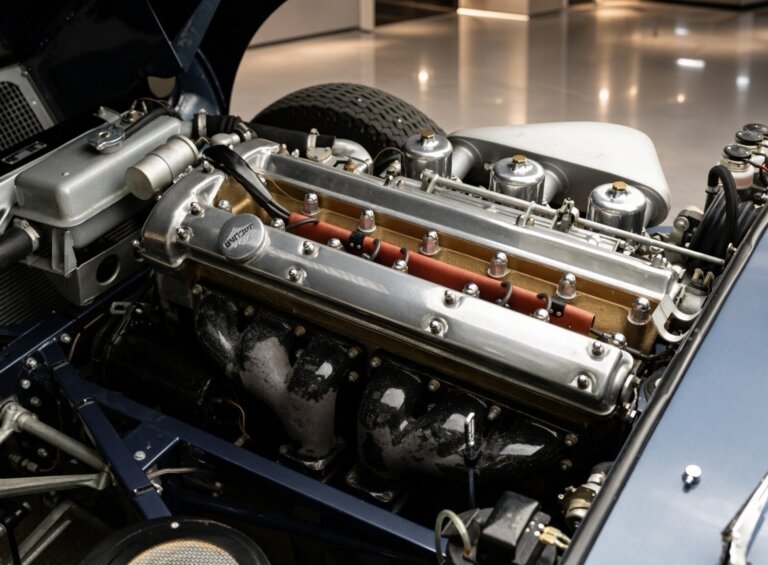
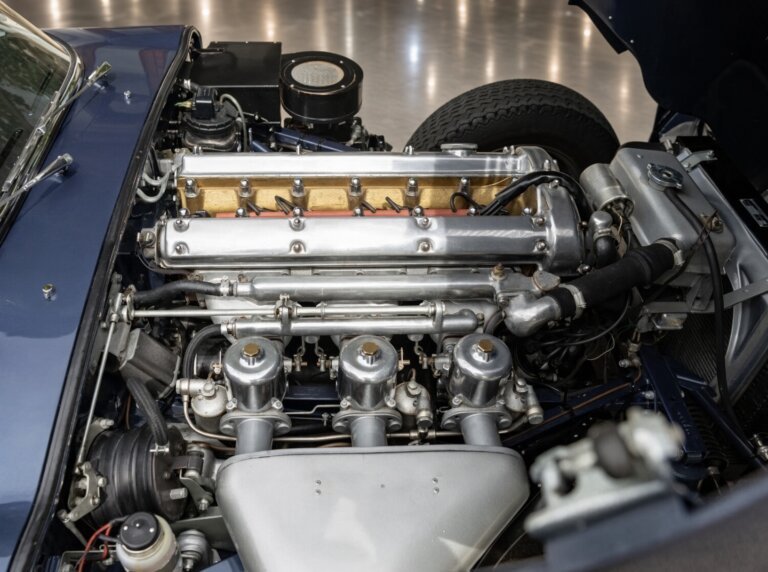
The Series 1 initially used the 3.8-litre Jaguar XK straight-six, a double-overhead-camshaft engine with hemispherical combustion chambers and three SU HD8 carburettors.
The engine produced approximately 265 bhp at 5,500 rpm.
For its time, those figures were remarkable.
The XK engine combined strong performance with the smoothness required of a sophisticated grand tourer. It delivered its power progressively, allowing the E-Type to accelerate strongly while remaining composed at high cruising speeds.
Engine Specification
Specification | Jaguar E-Type Series 1 |
Engine | Jaguar XK DOHC Straight-Six |
Capacity | 3,781 cc |
Valvetrain | Twin overhead camshafts |
Induction | Triple SU HD8 carburettors |
Power | 265 bhp @ 5,500 rpm |
Transmission | 4-speed manual |
Drive | Rear-wheel drive |
Front Suspension | Independent, torsion-bar |
Rear Suspension | Independent Jaguar IRS |
Brakes | Four-wheel disc brakes |
Construction | Monocoque with tubular front subframe |
The later Series 1 4.2-litre introduced greater torque and a number of important usability improvements, making it particularly attractive to owners intending to use their E-Type for long-distance touring.
Engineering Without Compromise
The E-Type’s reputation was never based solely on horsepower. Its real achievement was the balance between its major engineering systems. The independent front suspension used torsion bars, while the rear suspension incorporated Jaguar’s advanced independent rear axle.
Four-wheel disc brakes provided the stopping power expected of a car capable of approaching 150 mph. The steering was direct and responsive, while the low centre of gravity and carefully developed suspension geometry gave the car an unusually sophisticated driving character. The E-Type therefore delivered more than straight-line performance. It offered a level of handling, braking and ride quality that made it genuinely capable on winding roads as well as open motorways.
Roadster or Fixed-Head Coupé?
The Series 1 was offered in two distinctly different forms.
Roadster
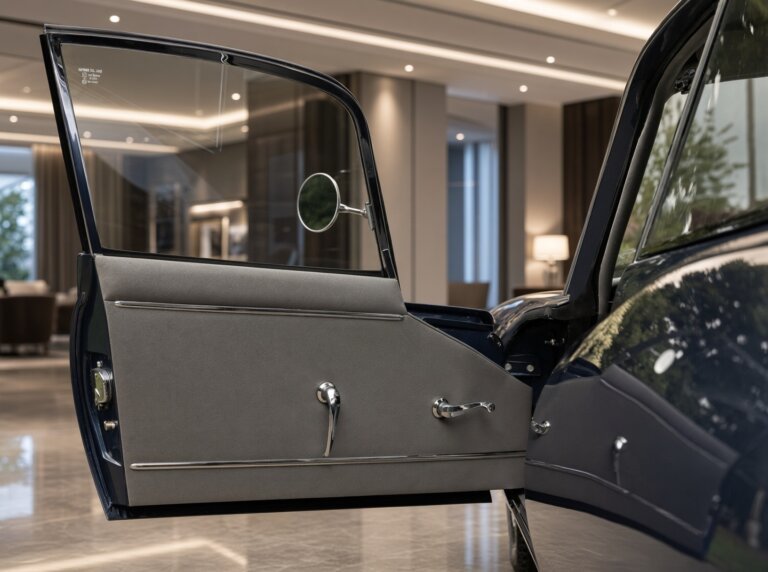
The open two-seat Roadster became the definitive E-Type. With its folding hood, long bonnet and open cockpit, it provided an intensely visual and mechanical driving experience. The Roadster remains one of the most recognisable shapes in automotive history. For many collectors, it represents the purest expression of the E-Type concept.
Fixed-Head Coupé
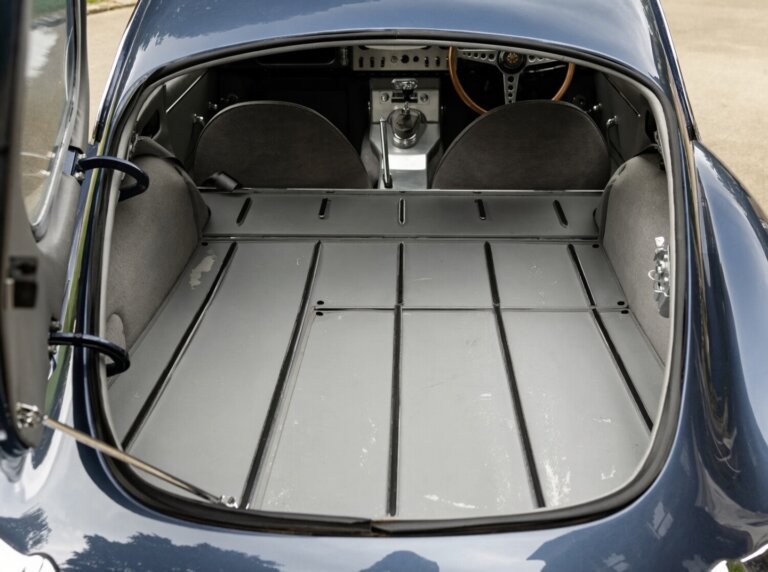
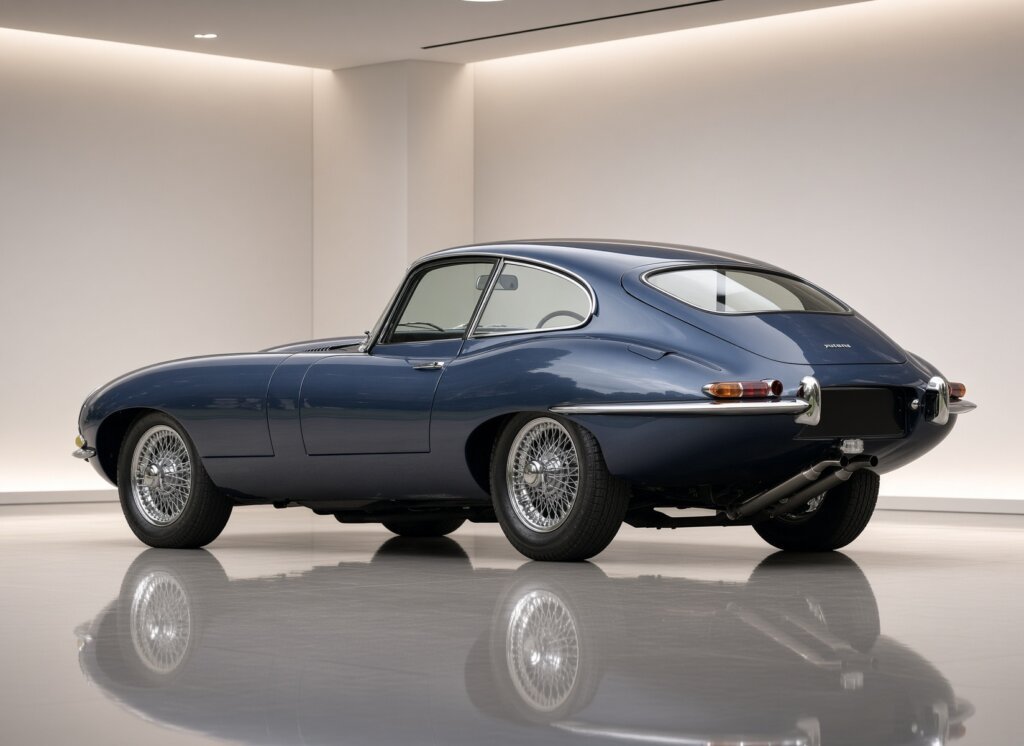
The Fixed-Head Coupé offered a more sophisticated interpretation. Its enclosed roof created a graceful fastback silhouette and provided additional protection for long-distance touring. The Coupé also demonstrated just how versatile Sayer’s basic design could be. The same fundamental architecture could appear either as an uncompromising open sports car or an elegant high-speed GT.
The Evolution of Series 1
The earliest E-Types occupy a particularly important position in Jaguar history. The first 3.8-litre cars possessed several features that distinguish them from later production examples, including the earliest “flat-floor” construction. These early cars are now among the most closely watched by collectors.
In 1964, Jaguar introduced the 4.2-litre version of the XK engine. The larger engine provided greater torque, while improvements were made to the braking system, seating and transmission. This created a more mature and usable E-Type without fundamentally altering the character of the original design.
For collectors, the choice between a 3.8 and 4.2 is therefore not simply a matter of performance. It is a question of character. The early 3.8 embodies the purity of the original concept, while the 4.2 offers greater usability and refinement.
Racing DNA
Although the E-Type was developed as a production road car, competition remained part of its DNA. Jaguar had already established an extraordinary reputation at Le Mans, and the E-Type inherited much of the engineering philosophy responsible for those victories.
Private entrants subsequently campaigned E-Types in competition, demonstrating the strength of the underlying chassis and drivetrain. The connection with the D-Type is particularly important. The E-Type represented the transformation of Jaguar’s racing knowledge into a car designed not for the pit lane, but for the open road. It was a competition philosophy translated into a production automobile.
A New Definition of the British Sports Car
When the E-Type appeared, the European sports-car market was already populated by prestigious names. Yet Jaguar offered something different.
The E-Type combined exotic appearance with sophisticated engineering at a price considerably below many of its European rivals. Its performance was extraordinary. Its appearance was unforgettable. And its mechanical architecture was sophisticated enough to challenge far more expensive automobiles.
The E-Type consequently became one of the cars that helped redefine what a British sports car could be.
What Makes a Series 1 E-Type Collectible?
The E-Type possesses an exceptionally strong combination of collector attributes.
- Design — Malcolm Sayer’s shape is regarded as one of the defining designs of the twentieth century.
- Engineering — Monocoque construction, independent suspension and four-wheel disc brakes were advanced solutions for their era.
- Provenance — Cars with documented Jaguar history or significant previous owners can command substantial premiums.
- Originality — Correct factory specification and surviving original components are highly valued.
- Body Style — Early Roadsters are particularly sought after, while exceptional Fixed-Head Coupés have their own dedicated following.
- Production Date — The earliest 3.8-litre cars occupy a special position within the market.
- Usability — Unlike many ultra-rare collector cars, an E-Type can still be driven and enjoyed extensively.
- This combination gives the Series 1 a remarkable position within the collector-car world.
The E-Type Today
- The E-Type has moved far beyond its original role as a high-performance sports car.
- It is now regarded as an important piece of twentieth-century industrial design.
- Its value lies partly in rarity, but its desirability is driven by something deeper.
- The car represents a moment when Jaguar successfully united aerodynamics, motorsport engineering and artistic design in a single production automobile.
- That achievement continues to resonate with collectors.
- Indicative Collector Market
- Working value: approximately $150,000–$500,000+
- This range should be regarded as an indicative collector-market guide rather than a formal valuation.
- Exceptional cars can command considerably more when they possess extraordinary provenance, originality, competition history or significant early-production status.
An Extraordinary Auction Record
The most remarkable evidence of the E-Type’s potential value comes from an exceptionally important car.
- The first production E-Type ever sold achieved £911,250 at Gooding & Company’s London auction in 2023.
- Its significance extended far beyond condition.
- The car carried exceptional Jaguar provenance and represented the earliest chapter of the E-Type’s production history.
- The result demonstrated an important principle within the collector market:
- An E-Type with exceptional historical significance belongs in an entirely different valuation category from an ordinary example.
- For collectors, provenance can therefore be as important as specification.
The Collector’s Perspective
The Jaguar E-Type Series 1 is not simply a classic sports car.
It is an engineering statement.
It represents the moment Jaguar transferred the lessons of the D-Type and its Le Mans programme into a road-going automobile of extraordinary elegance.
Malcolm Sayer’s aerodynamic thinking gave the car its unmistakable form.
The XK straight-six gave it its character.
The monocoque structure provided its foundation. Independent suspension and four-wheel disc brakes gave it the dynamic ability to match its appearance.
And the combination of beauty, performance and usability made the E-Type one of the most influential automobiles of its generation. For the collector, the greatest examples are those where history, specification, originality and presentation meet.
The E-Type did not merely become a classic.
It became a definition of what a classic sports car could be.

Location Europe
We discreetly source and place vehicles of this calibre for private clients.
This page is for general information only and is not financial advice. Values vary widely by chassis, history and condition.